🔹A Historic Gathering of Yemeni Minds
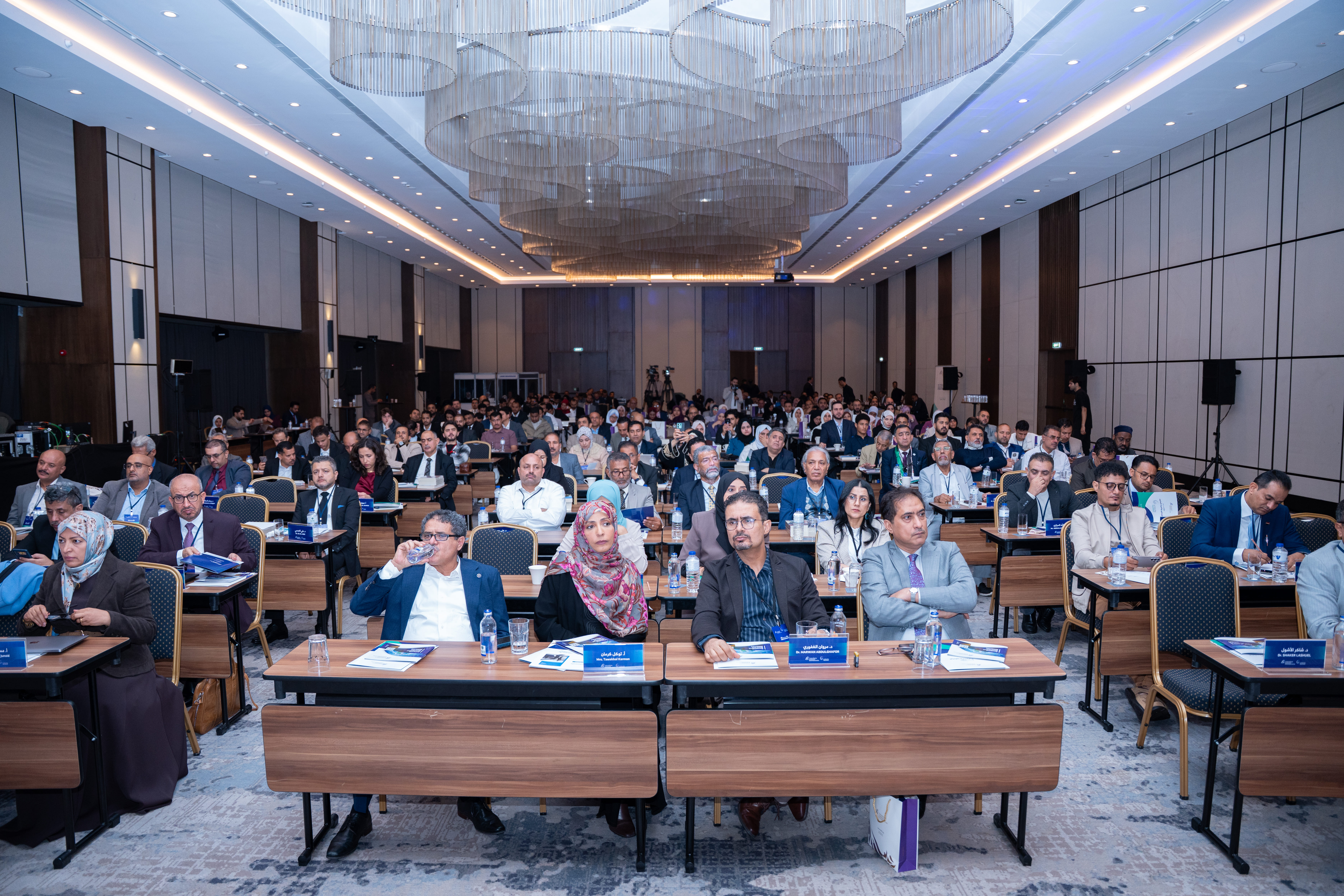
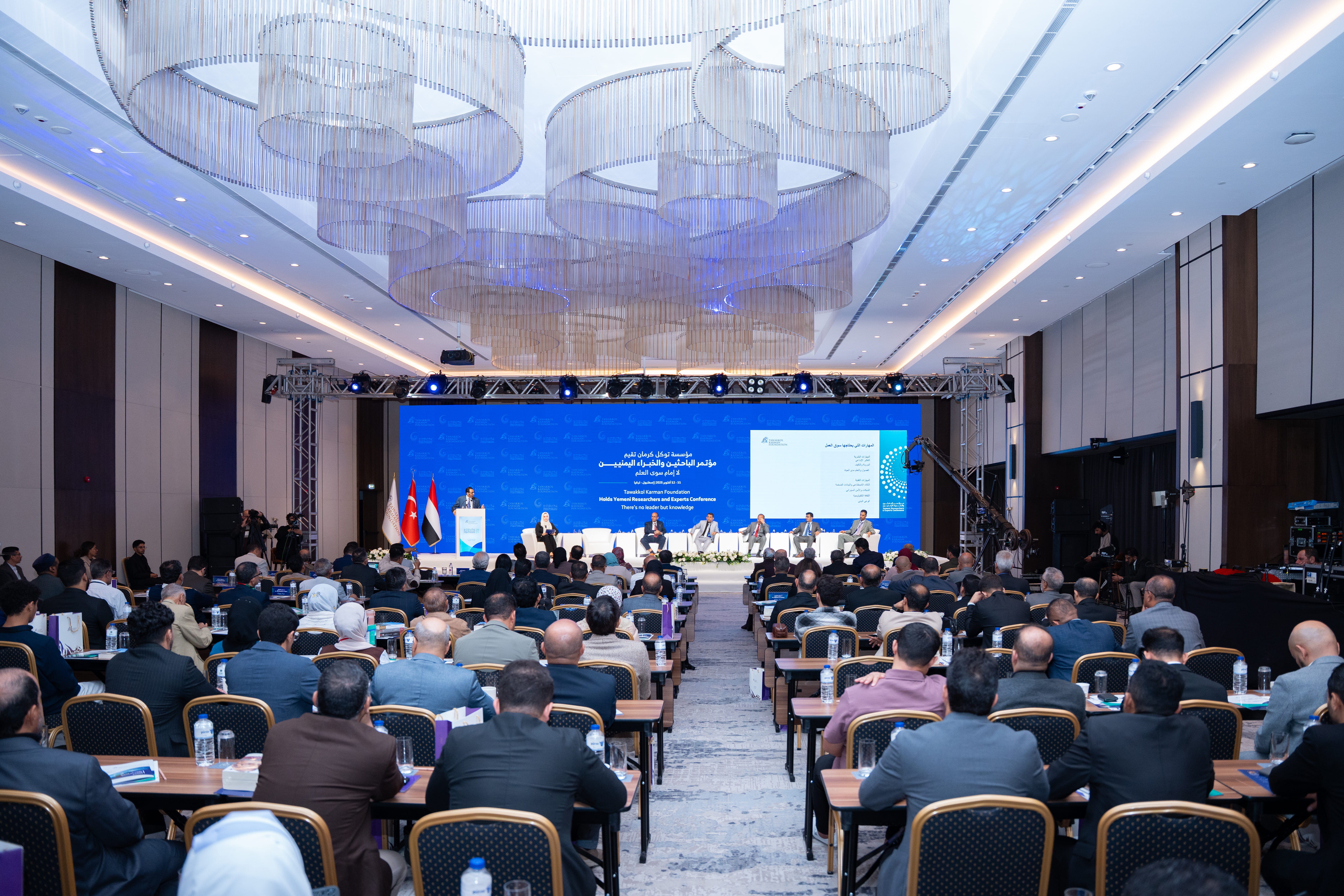
Under the theme “There’s No Leader but Knowledge,” the Yemeni Researchers and Experts Conference, organized by Tawakkol Karman Foundation, concluded successfully in Istanbul on October 11–12, 2025.
The conference brought together 40 leading Yemeni academics, researchers, and experts from inside Yemen and 15 countries around the world, uniting them on one platform to explore Yemen’s complex challenges and propose scientific, practical solutions for peace and development. More than 250 researchers and advocates for development and peace participated in the conference, reflecting a shared commitment to advancing Yemen’s progress and shaping a better future for the country.
The conference brought together 40 leading Yemeni academics, researchers, and experts from inside Yemen and 15 countries around the world, uniting them on one platform to explore Yemen’s complex challenges and propose scientific, practical solutions for peace and development. More than 250 researchers and advocates for development and peace participated in the conference, reflecting a shared commitment to advancing Yemen’s progress and shaping a better future for the country.
During the two-day event, participants emphasized the need to enhance education, food security, address the psychological effects of war, reform the economy and health sectors, and make better use of energy and modern technology. They presented over 40 academic papers across diverse fields — education, health, economy, food and energy, identity, and politics — offering data-driven insights and recommendations to guide Yemen’s reconstruction and future. Participants called for building a sustainable development and peace based on citizenship, competence, reconciliation, transitional justice, the disarmament of armed groups, and fighting corruption, while reaffirming the principles of the republic, unity, democracy, and civil state-building.
The conference called to develop strategic visions that strengthen collaboration among researchers and institutions and to provide a credible reference for policymakers and others interested in Yemen’s future. It also highlighted the urgent need to involve the academic and scientific elite in addressing Yemen’s complex crisis — one that has proven too difficult for politics alone to solve.
Some of the Main Key Recommendations:
🎓Education and Research
Develop a national vision to reform education, especially higher education. Ensure equal access to education, protect it from ideological bias, value teachers and professors as pillars of progress, and draw on the Yemeni diaspora to build an inclusive, innovative, and identity-strengthening system.
🏥Health
Strengthen Yemen’s health system, expand access, and improve quality by integrating physical and mental healthcare, modernizing infrastructure, and adopting digital technology. Enforce strict oversight to combat smuggled medicines, ensure proper drug storage, and enhance transparency, efficiency, and sustainability.
🗳️Governance
Reaffirm Yemen’s unity, democracy, and republican values. Build leadership grounded in justice and reconciliation, end militarization, uphold the rule of law, and ensure independent, accountable governance. Fight corruption and rejects hate speech and restores public trust.
💰Economy
Unify economic institutions, ensure payment of salaries, and improve living standards through good governance, transparency, and anti-corruption measures. Diversify the economy by developing agriculture, fisheries, and minerals, and encourage investment and strategic projects like the Bab al-Mandab–Djibouti Bridge to achieve sustainable growth. Build sustainable peace as the basis for economic recovery by ending the war.
⚡🌿Energy, Food and Environment
Adopt a national policy to expand renewable energy, ensure fair access to power, and promote sustainable management. Strengthen food security through rural empowerment and support for Yemen’s honey industry. Promote sustainability through recycling, conservation, and pollution reduction—establishing these as core pillars of Yemen’s recovery and resilience.
🌍National Identity
Strengthen Yemen’s national identity grounded in love and unity. Build an inclusive identity through education, media, art, and culture while combating sectarian, regional, tribal, and racist ideologies and hate speech. Use arts, music, and enlightened thought to promote unity, cooperation, and Yemen’s positive image at home and abroad.
💻Technology
Adopt AI and digital governance across sectors to make innovation the cornerstone of Yemen’s progress.
🔹Partnership, Not Dependency
The conference urged all friendly and brotherly nations to build relations with Yemen based on partnership rather than dependency, grounded in mutual respect, shared interests, and support for national self-reliance and sustainable development.
🔹 Yemeni People are Capable of Reclaiming their state.
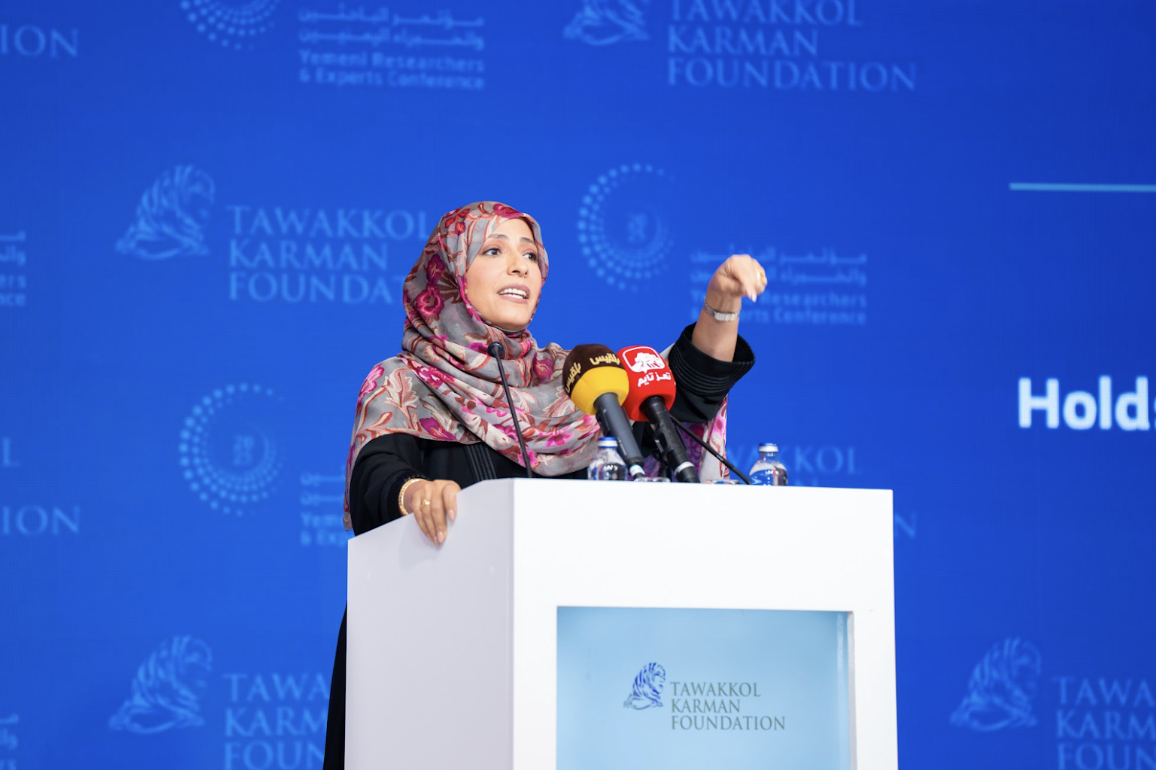
In her opening speech, Nobel Peace Prize Laureate Tawakkol Karman described the conference as “a meeting of thought, science, and hope.”
She emphasized that what unites Yemenis today is their love for Yemen and their shared faith that the current wars, conflicts, and foreign tutelage are only passing clouds that will soon disappear, because, as she said,
“We believe that nations do not die, and homelands never vanish.”
She warned that the marginalization of intellect and the devaluation of knowledge had opened the door for extremist and non-national forces, stressing that:
“Knowledge creates the free human being and gives us immunity against ignorance, superstition, and the destructive projects that have torn our nations apart. There is no safe path for Yemen other than one where science and knowledge are the top national priorities — at the heart of the state and society.”
She criticized both the internationally recognized government and the Houthi militia in the cities they control for failing Yemeni citizens and depriving them of essential services such as education, healthcare, salaries, food, medicine, and other basic needs, saying:
“The only two sectors thriving in Yemen today are the war economy and political corruption.”
Karman affirmed Yemen’s immense potential, stressing that the time has come for Yemen to reclaim its own decision and sovereignty, asserting that Yemen is not anyone’s backyard and that It is the time has come for the world to hear Yemen’s words, not the words of others.
She emphasized that: “Our land has a unique strategic location and vast wealth in oil, gas, gold, minerals, fisheries, and solar energy. Yemen’s people — with their energy and intelligence — are fully capable of rebuilding their state and shaping their future independently, through justice, partnership, and reconciliation.”
She concluded by affirming that the Great Yemen’s people, with their determination and intellect, can rebuild their state free from external control — through knowledge, partnership, and genuine reconciliation that begins in towns and villages across the country.
🔹The Pivotal Role of Researchers and Academic Experts
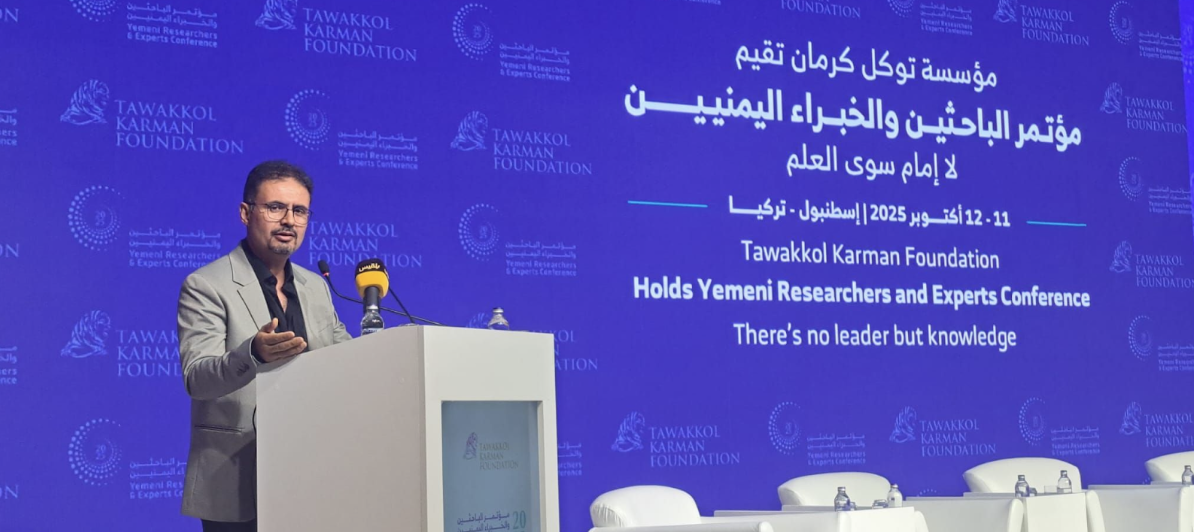
Dr. Marwan Al-Ghafouri, Chair of the conference’s scientific committee, said that Yemen is facing a complex and existential crisis caused by fragmentation and the lack of serious efforts to prevent state collapse.
He explained that Yemenis are capable of generating practical and innovative solutions, and that this conference reminds the nation that science and research can offer new and realistic perspectives.
He also referred to international examples where researchers and academics played a central role in transforming their countries during times of crisis similar to Yemen’s.
🎥Watch Dr. Marwan Al-Ghafouri’s Head of Conference’s Scientific Committee’s Speech
🎥 Watch all conference speeches, seven sessions, and the final statement:
Conference sessions
Session One: Academic Education
Chair: Dr.Nada Qanbar
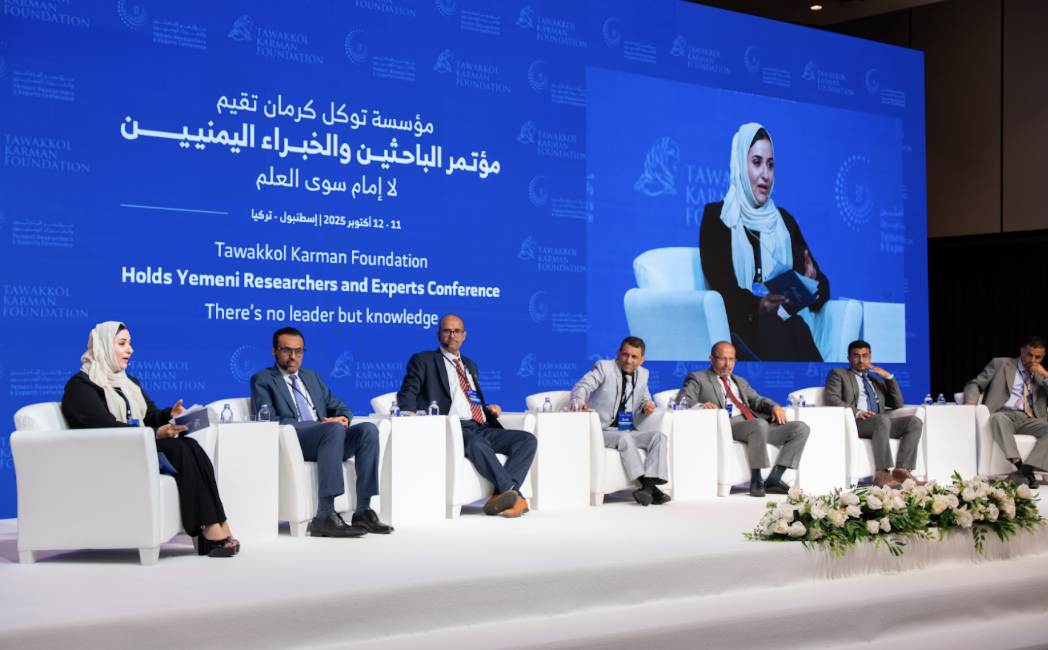
Papers presented:
- Sectarian infiltration in Yemeni universities – Dr. Saeed Iskandar (Yemen)
- Higher education in the age of artificial intelligence – Dr. Ali Al-Kazmi (Netherlands)
- Modern trends in academic specializations – Dr. Shaker Al-Ashwal (Qatar)
- The reality of Yemeni university students 2015–2025: challenges and solutions – Dr. Mukhtar Mohammed (Yemen)
- From knowledge-making to state and civilization-building – Dr. Ahmed Al-Duba’i (Scotland, UK)
- Toward another model of education in Yemen – Dr. Habib Sorouri (France)
- The suffering of university professors in Yemen and its impact on higher education’s future – Dr. Mohammed Al-Tabali (Yemen)
🎥Watch session one: Academic Education
Session Two: Medical Infrastructure in Yemen
Chair: Dr. Mohammed Al-Samie (Germany)
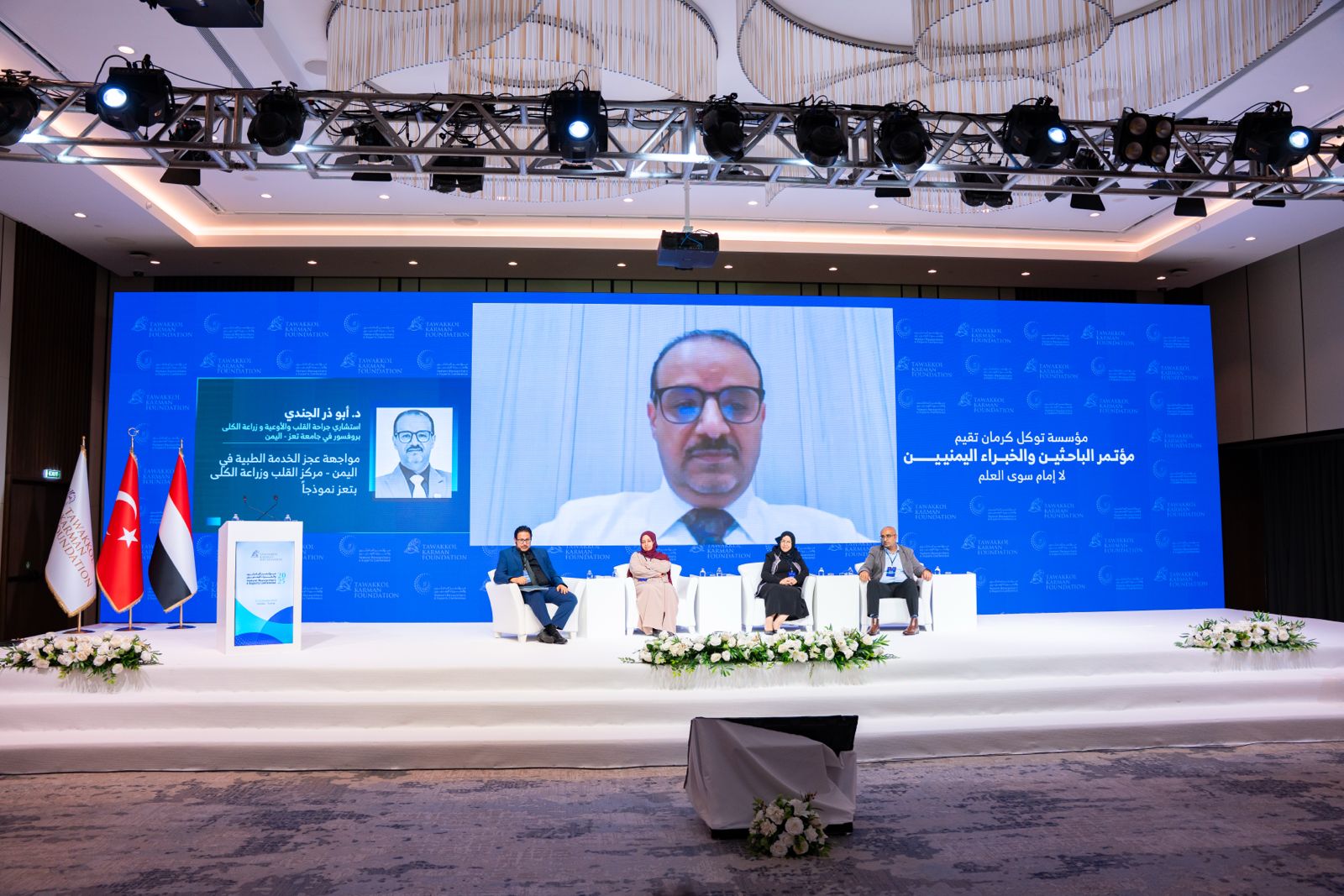
Papers presented:
-
The mental health map of Yemeni society after eight decades of conflict – Dr. Najat Khalil (Türkiye)
-
Oral health in Yemen: a comprehensive review – Dr. Zainab Al-Hammadi (United Kingdom)
-
Trends in scientific publishing and challenges facing Yemeni researchers – Dr. Kamal Hazam (Yemen)
-
Risks in Yemen’s pharmaceutical market – Dr. Ghamdan Beshr (Belgium)
-
Medical service gaps: the Heart and Kidney Transplant Center in Taiz as a model – Dr. Abu Dhar Al-Janadi (Yemen)
🎥Watch session two: Medical Infrastructure in Yemen
Session Three: Health – The Way Out
Chair: Dr. Burhan Radman (Germany)
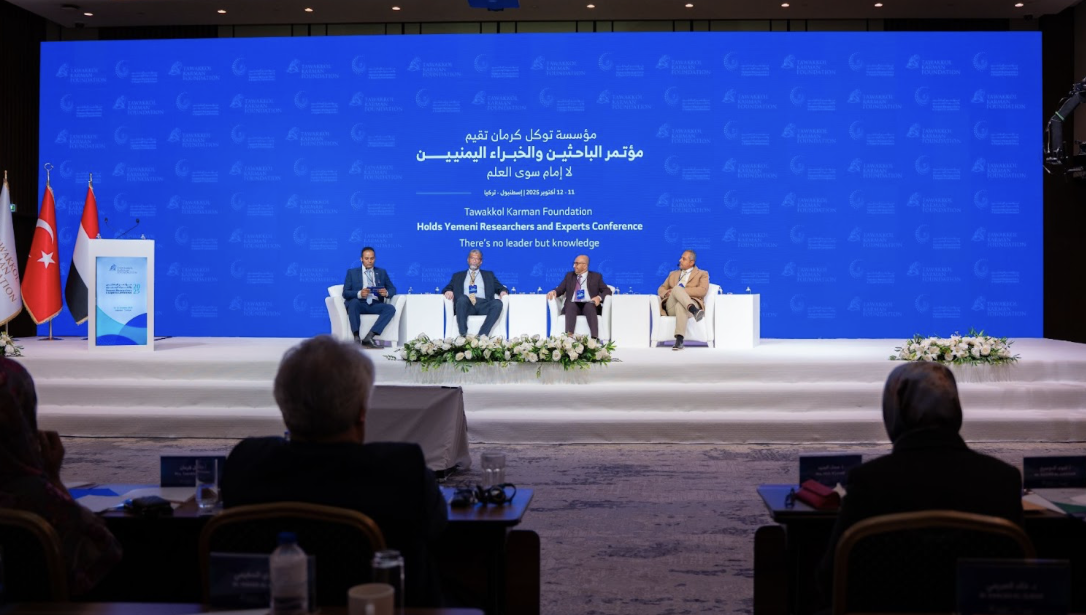
Papers presented:
- Toward a sustainable national system for psychosocial and social recovery – Dr. Mustafa Al-Absi (United States)
- Health bridges between Yemen and the world – Dr. Mariam Baburaik (United Kingdom)
- Medical education in Yemen: opportunities and risks – Dr. Abdelqader Bayazid (Yemen)
- Medical enlightenment and public health – Dr. Khaled Al-Suraimi (Qatar)
- AI strategies to improve patient access to care at home and abroad – Dr. Hamdi Al-Hakimi (Netherlands)
🎥Watch session three: Health – The Way Out
Session Four: The Reality and Future of Political Life in Yemen
Chair: Ms. Asia Thabet (Türkiye)
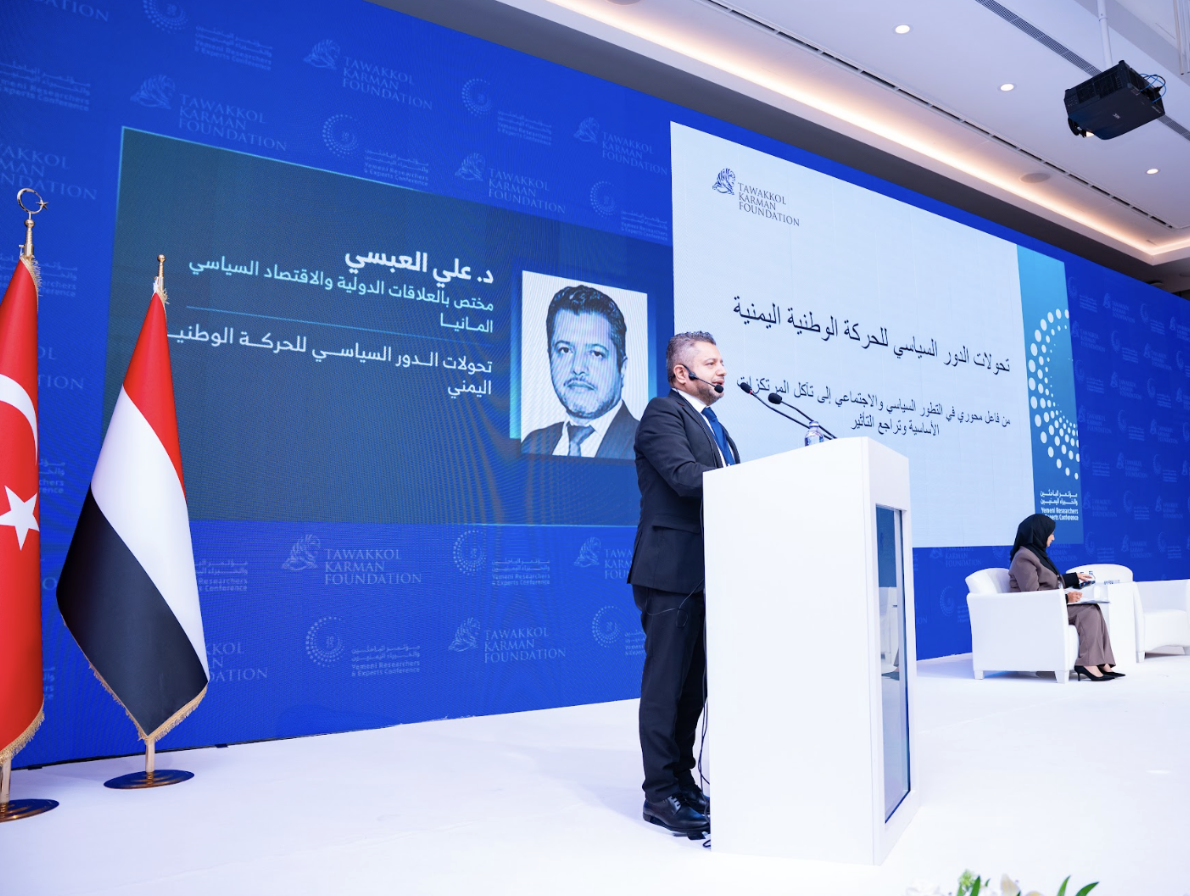
Papers presented:
- Political parties amid wartime realities – Dr. Abdelwas’e Al-Himyari (Yemen)
- Transformations in the role of the Yemeni national movement – Dr. Ali Al-Absi (Germany)
- Contextual realism: a theoretical framework for post-Arab Spring transitions – Yemen as a case study – Dr. Elham Manea (Switzerland)
- Deconstructing Yemeni political authority from independence to the present – Dr. Hamoud Al-Awdi (Yemen)
- Sub-state conflicts and their impact on state and social cohesion – Dr. Mustafa Al-Jabzi (France)
🎥Watch session four: The Reality and Future of Political Life in Yemen
Session Five: The Economic Issue
Chair: Dr. Raidan Al-Saqqaf (United Arab Emirates)
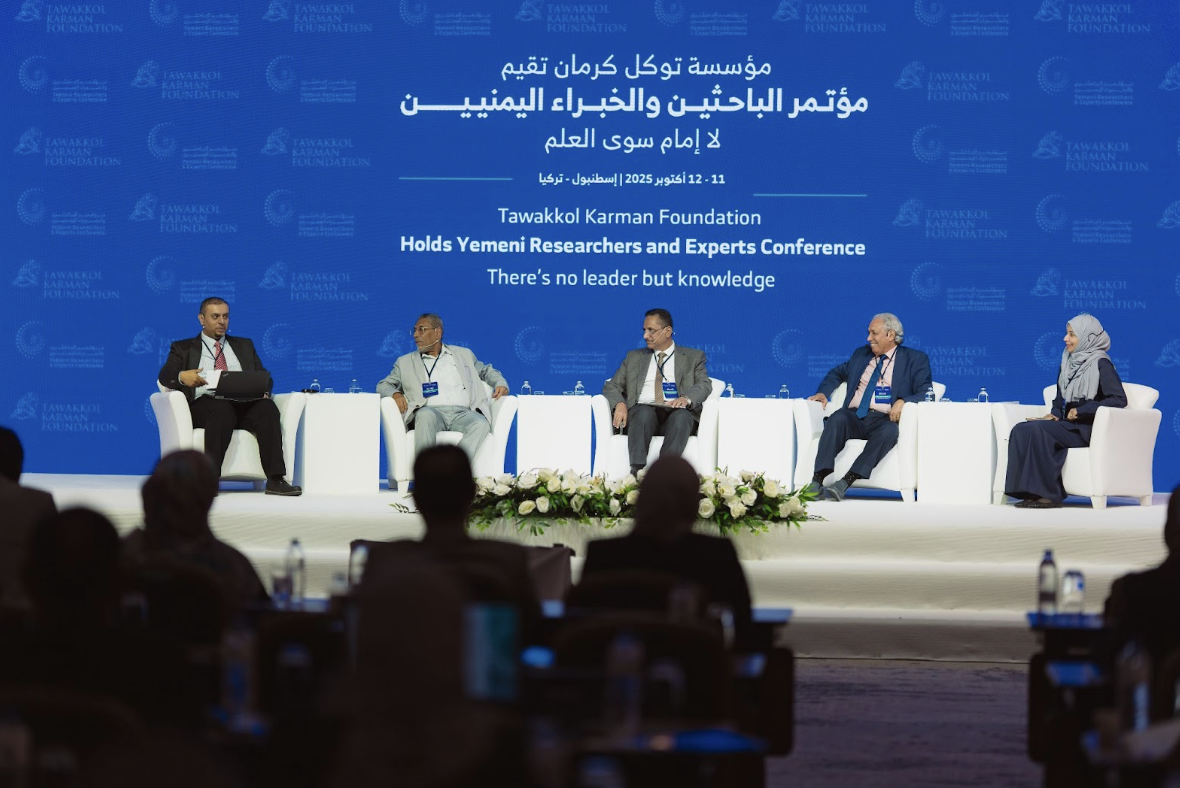
Papers presented:
- The LNG agreement in Yemen: economic, legal, and technical analysis and a vision for citizen-centered resource use – Dr. Abdelghani Gaghman (Germany)
- Yemen’s regional challenges and strategic leverage – Dr. Abdelqader Abdullah (Germany)
- The Yemeni economy: destruction and remaining capacities – an analytical study – Dr. Yahya Abdelghafar (Yemen)
- Government policies for sustainable development in the Republic of Yemen – Dr. Mohammed Qahtan (Yemen)
- Lessons from international experiences in post-war economic reconstruction – Dr. Tamara Al-Hakimi (Yemen)
🎥Watch session five: The Economic Issue
Session Six: Energy and Food
Chair: Dr. Bassam Al-Ghafouri (India)
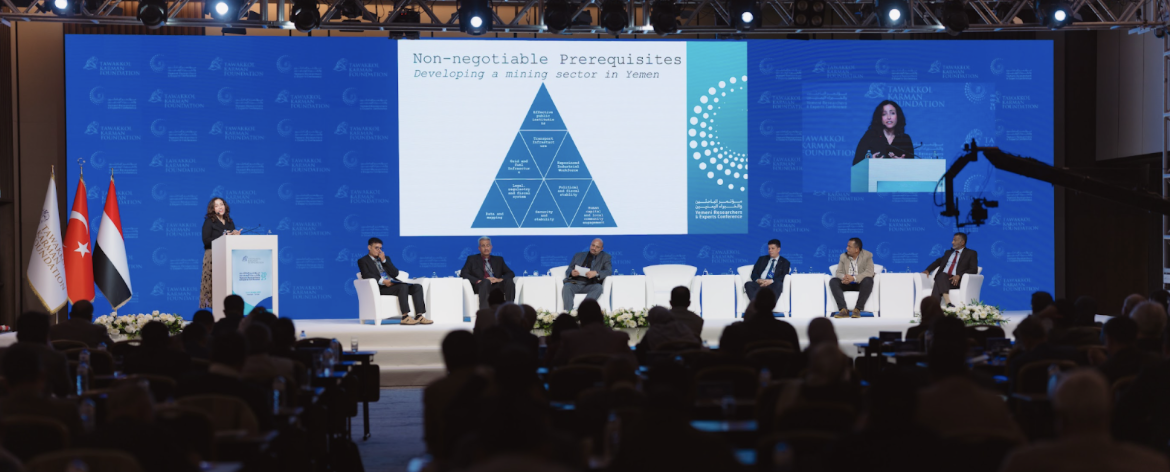
Papers presented:
- Solar energy in Yemen: realities and future challenges – Dr. Ali Abdelqader (Yemen)
- Critical minerals in Yemen – Ms. Najwan Al-Junaid (Canada)
- An environmental panorama of Yemen – Dr. Hisham Naji (Yemen)
- Household hydroponics and its role in food security and livelihoods – Dr. Ahmed Fadl (Yemen)
- Food security policy as an entry point for sustainable development in conflict settings: the case of Yemen – Dr. Moeen Al-Huwaish (Yemen)
- Yemeni honey: an untapped economic resource – Dr. Abdullah Nasher (Yemen)
🎥 Watch session six: Energy and Food
Session Seven: National Identity and Its Transformations
Chair: Ms. Aswan Shaher (Netherlands)
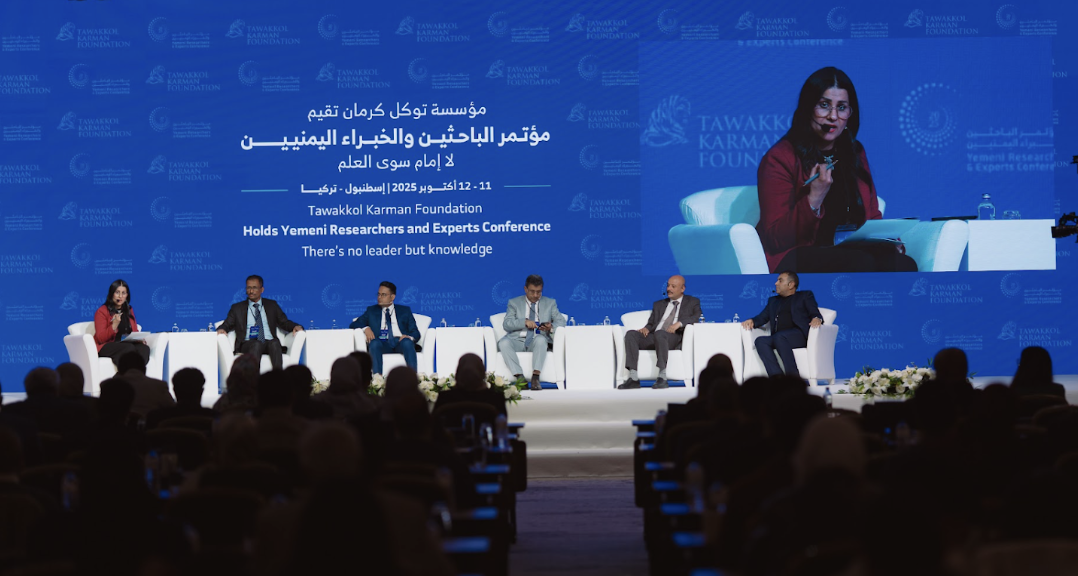
Papers presented:
- Shifts in national sentiment in Yemeni cultural discourse – Dr. Abdelaziz Al-Zera’i (Yemen)
- The role of Yemen’s Ijtihad School in shaping national identity – Dr. Mujeeb Ghallab (Yemen)
- The Yemeni song as a tool of social and political resistance – Mr. Abdullah Al-Harazi (Netherlands)
- Identity under threat: the Imamate as a model of identity conflict – Mr. Zayed Jaber (Türkiye)
- National identity: a conceptual framework with Yemen as a case study – Mr. Nabil Al-Bukairi (Türkiye)
🎥Watch session seven: National Identity and Its Transformations
🔹Closing Session:
Representatives from each session summarized key findings and emphasized the importance of continuing this initiative, concluding with the conference’s final statement.
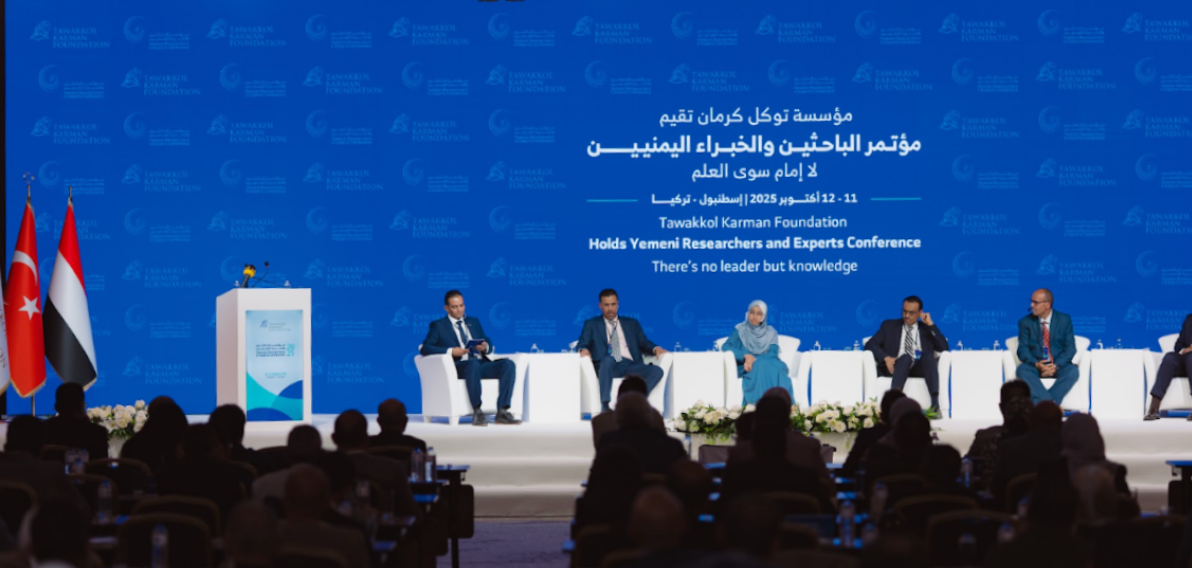
Speakers included:
- Dr. Mustafa Bahran - Yemeni nuclear scientist and Professor of Physics at Carleton University (Canada), Ph.D. in Nuclear Physics from the University of Oklahoma (USA). Former Minister of Electricity and Energy in Yemen, Prof. Bahran emphasized the urgent need to build a knowledge-based society and to place science and research at the heart of national reconstruction.
- Dr. Wafaa Iskandar - Founder and Director of Quality and Infection Control at the Hadramout Health Office, certified by the Ministry of Health and international organizations (Yemen)
- Mr. Khaldoun Bakhil - Expert in security governance and National Coordinator for Yemen’s Security Stabilization Program (Switzerland)
- Dr. Ahmed Al-Duba’i - Professor of Internet of Things and Artificial Intelligence, Scotland (UK)
Paper: From Knowledge Production to State and Civilization Building - Dr. Shaker Al-Ashwal - Executive Director, Global Institute for Studies (Qatar)
Paper: Modern Trends in University Majors - Dr. Mukhtar Mohammed - Professor of Renewable Energy Engineering and Vice Dean, Faculty of Engineering, University of Taiz (Yemen)
Paper: The Reality of University Students in Yemen (2015–2025): Challenges and Solutions.
📖Read the full final statement:
👉https://yre.tkif.org/en/component/content/article/final-statement-of-the-yemeni-researchers-and-experts-conference?catid=10&Itemid=175
🔹Watch the Final Statement:
🔹About Tawakkol Karman Foundation
An international non-governmental organization founded by Nobel Peace Laureate Tawakkol Abdulsalam Karman, working to build peace and promote sustainable development by empowering communities in education, health, infrastructure, and the economy, and by advancing the role of women and youth in leadership and public life. The Foundation’s work is guided by the principles of democracy, good governance, and human rights as the foundations of lasting peace.
Explore Tawakkol Karman Foundation’s activities: