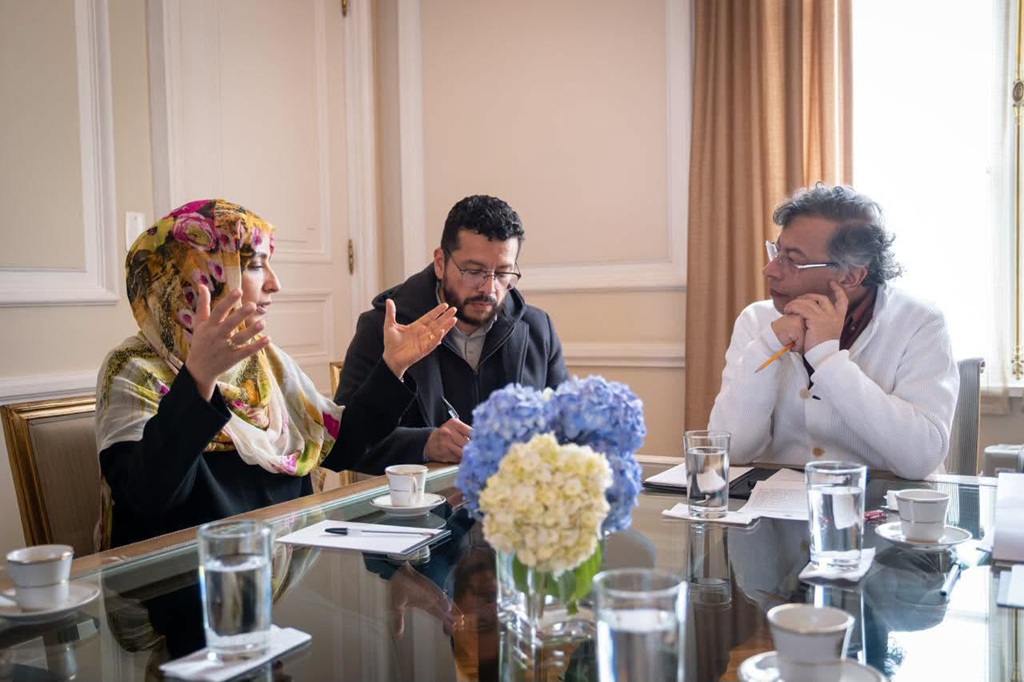
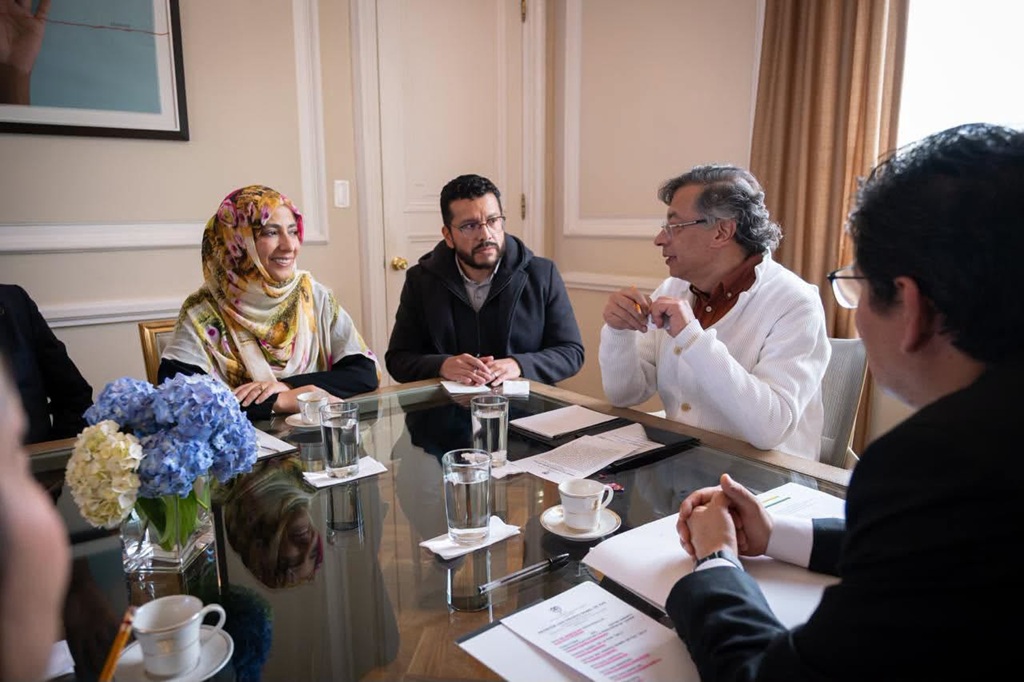
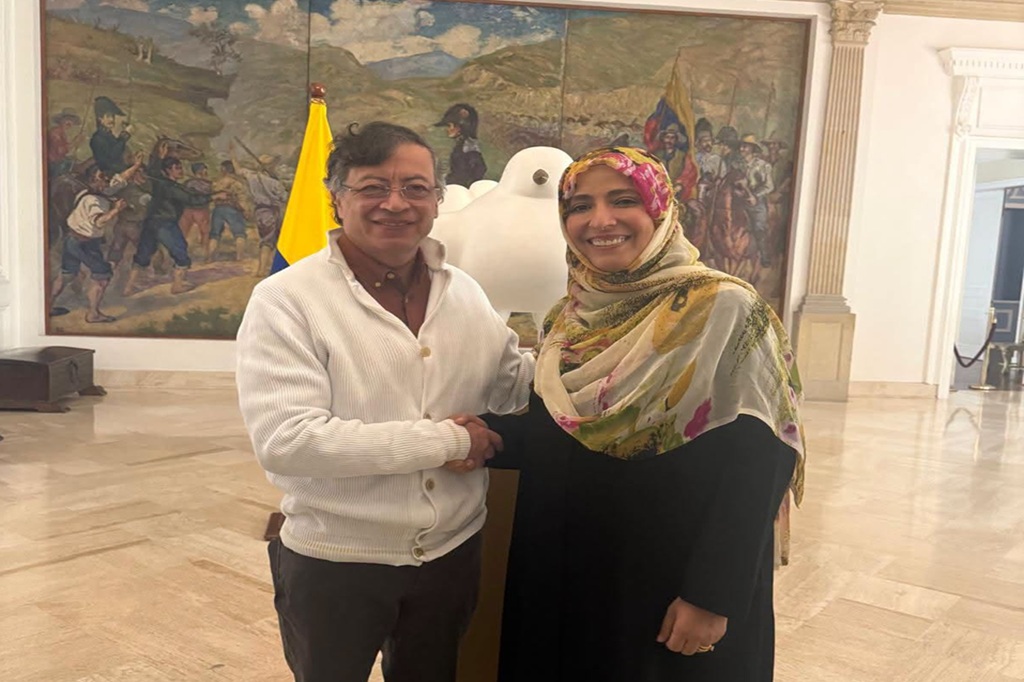
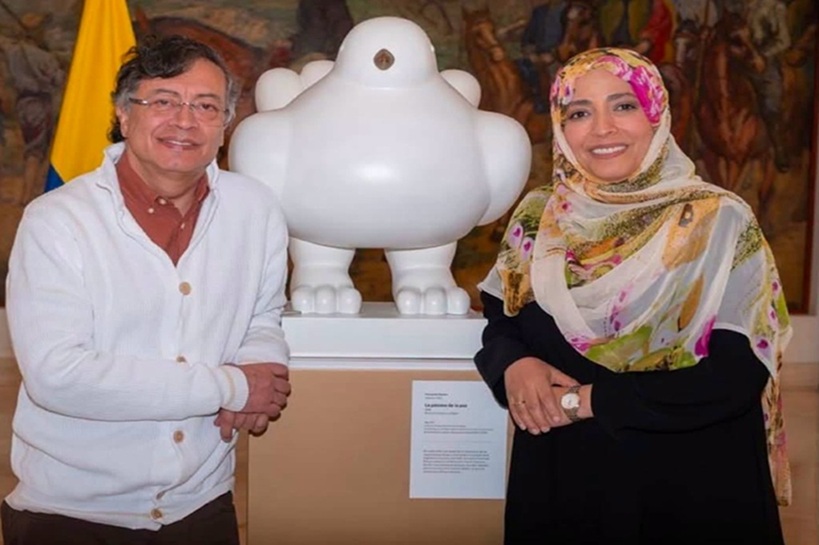
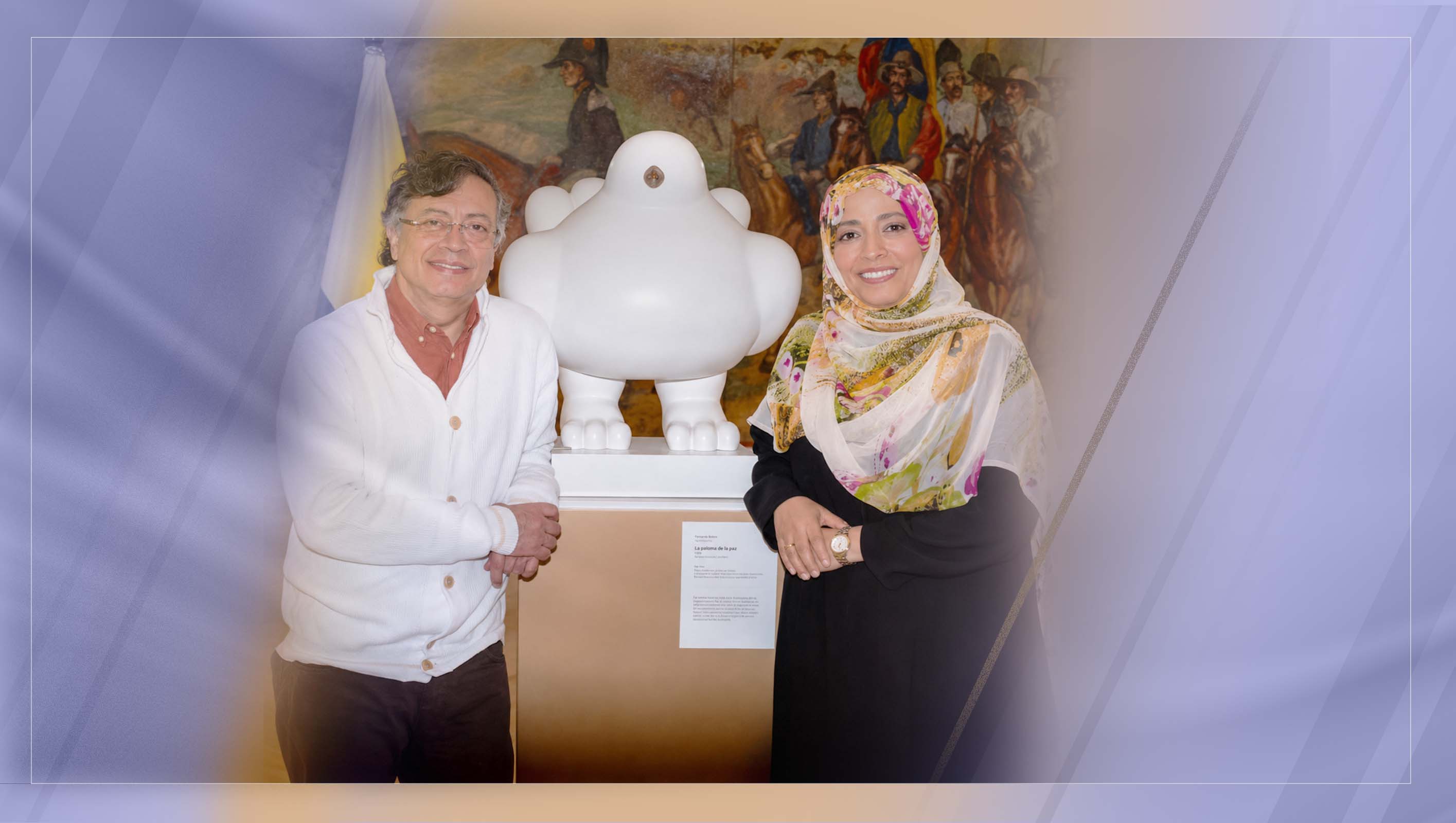
Human rights advocate and Nobel Peace Prize laureate Tawakkol Karman met with Colombian President Gustavo Petro at the Presidential Palace during her visit to Colombia to participate in events marking the tenth anniversary of the Colombian Peace Agreement, which brought an end to decades of armed conflict.
During the meeting, Karman expressed her appreciation for President Petro's political journey and longstanding commitment to democratic values, social justice, and peace. She said she had followed his struggle for many years and believed that many of the principles he champions closely reflect the values she has dedicated her own life to advancing.
Karman described Petro as one of the most influential leaders of the contemporary democratic and progressive movement, saying that Colombia and the wider region benefit from his leadership and reform-oriented vision.
She also praised his advocacy for a more just international economic order and his broader approach to peacebuilding, noting that his efforts extend beyond preserving the 2016 peace agreement to addressing the structural causes of violence through development and social justice. She said this vision closely aligns with her own work in promoting peace, democracy, and justice in Yemen.
Karman further commended President Petro's clear and consistent position in support of the Palestinian people and his condemnation of Israeli attacks against civilians. She described his stance as principled and courageous, expressing her appreciation for what she called his commitment to justice and human dignity.
For his part, President Petro affirmed that the Palestinian cause remains a central issue for the democratic progressive movement in Colombia and across Latin America. He said that solidarity with the Palestinian people forms part of a broader commitment to social justice, opposition to occupation, and support for peoples striving for freedom.
President Petro also emphasized the importance of strengthening cooperation among progressive movements in Latin America, North America, the Arab world, and Africa. He said that building a broad international alliance is essential to advancing two shared objectives: achieving global justice and promoting lasting world peace.